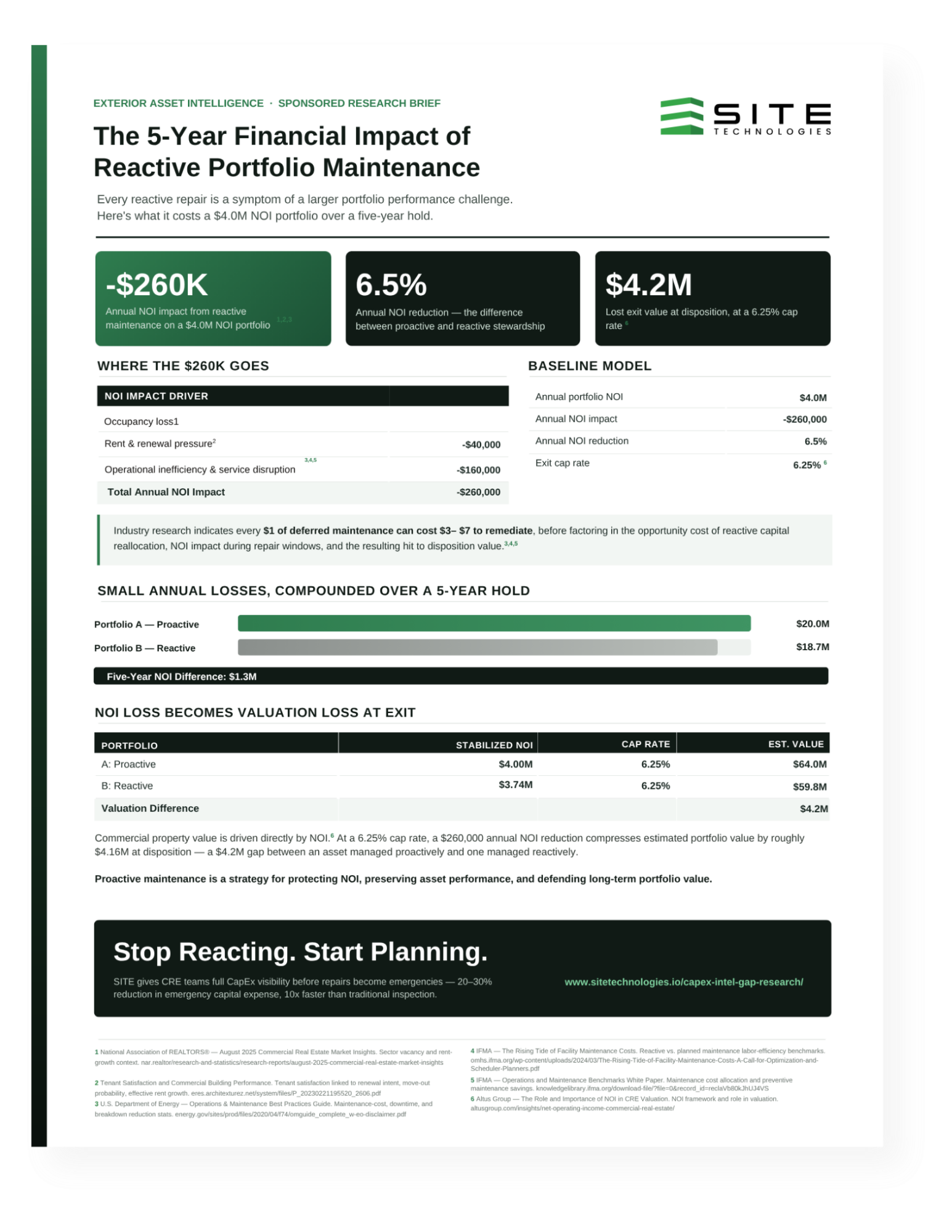
















The 5-Year Financial Impact of Reactive Portfolio Maintenance
A Small Repair Can Signal a Bigger Portfolio Problem
When exterior conditions are not consistently measured, tracked, and prioritized, teams are left to triage the most critical fixes first. That can make capital planning harder to defend and leave leadership with less confidence in where risks are across their full portfolio.
The Repair Invoice is Only the First Cost
When exterior asset issues reach the emergency stage, the visible cost is the repair itself. But the broader impact can include rushed vendor coordination, operational disruption, tenant dissatisfaction, budget changes, and deferred priorities.
For commercial real estate teams, the question is not only what the repair costs. The bigger question is how often those events are happening, where they are concentrated, and what they reveal about portfolio-wide asset performance.
NOI Pressure Builds Through Small Operating Frictions
Portfolio performance does not usually change because of one repair. It changes when multiple issues create repeated friction across operations, occupancy, renewals, service quality, and capital allocation.
That is why exterior asset visibility matters. Roof, pavement, facade, landscaping, and site condition problems can create business pressure before they become obvious financial events.
Stop Waiting for Maintenance Risk to Become Urgent
Reactive maintenance will always exist. The goal is not to eliminate every surprise. The goal is to reduce the avoidable ones.
CRE leaders need a better way to see exterior asset risk before it becomes emergency spend, tenant disruption, or a capital planning surprise. The 5-Year Financial Impact of Reactive Portfolio Maintenance report shows what that risk costs in real numbers — continue to the full report page below.