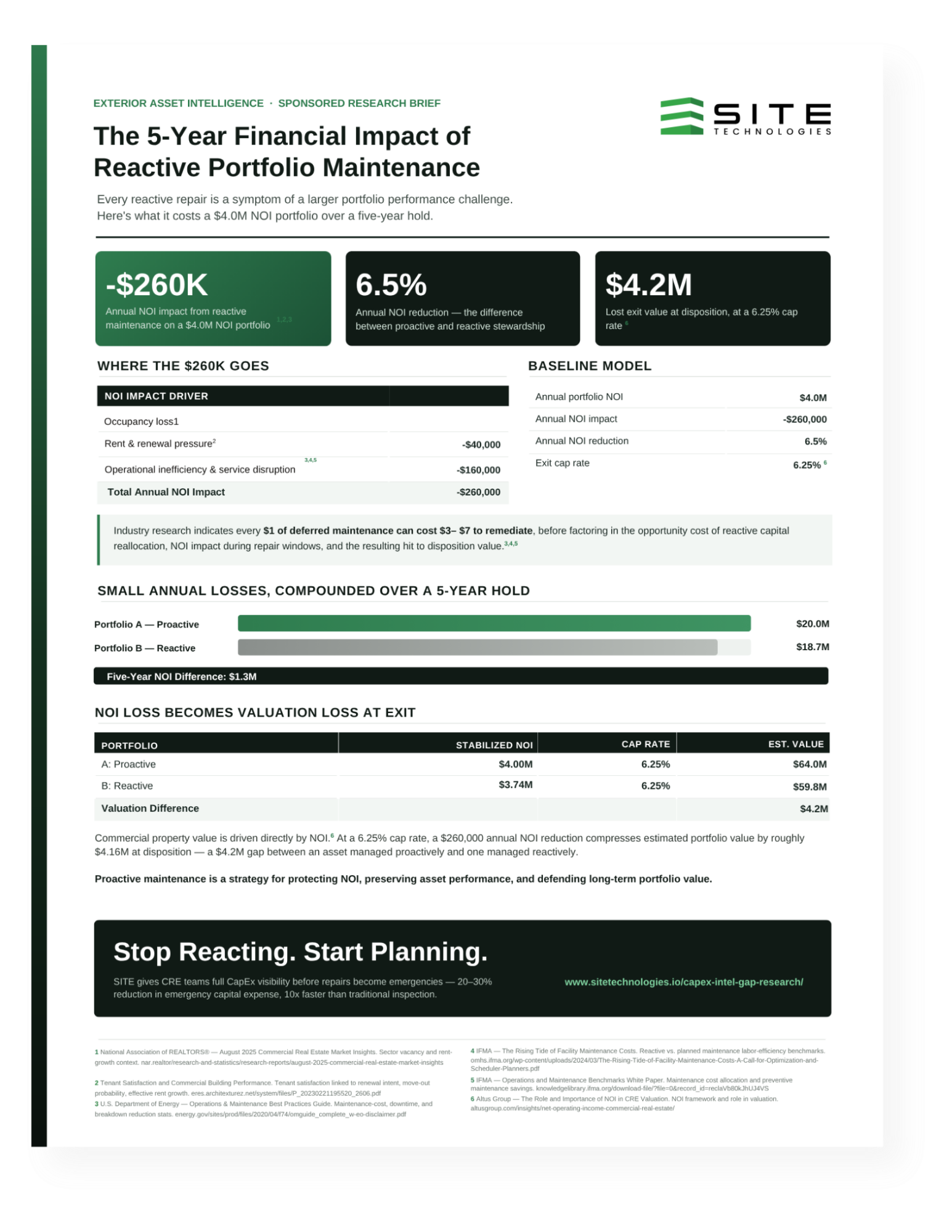
















The 5-Year Financial Impact of Reactive Portfolio Maintenance

 
Every reactive repair may look like a one-time maintenance event. Across a portfolio, those repairs can point to a larger performance problem affecting CapEx planning, NOI stability, tenant experience, and long-term value.

A Small Repair Can Signal a Bigger Portfolio Problem

Reactive maintenance is rarely just about the asset that failed. It often reflects a larger visibility gap across the portfolio.

When exterior conditions are not consistently measured, tracked, and prioritized, teams are left reacting to the issue that becomes urgent first. That can make capital planning harder to defend and leave leadership with less confidence in where risk is building.

This research brief looks at reactive portfolio maintenance through a financial lens and explains why better exterior asset intelligence matters before small issues become larger business problems.

The Repair Invoice Is Only the First Cost

When exterior asset issues reach the emergency stage, the visible cost is the repair itself. But the broader impact can include rushed vendor coordination, operational disruption, tenant dissatisfaction, budget changes, and deferred priorities.

For commercial real estate teams, the question is not only what the repair costs. The bigger question is how often those events are happening, where they are concentrated, and what they reveal about portfolio-wide asset performance.

The brief explains why reactive maintenance should be viewed as a recurring financial signal, not just a facilities expense.

NOI Pressure Builds Through Small Operating Frictions

Portfolio performance does not usually change because of one repair. It changes when multiple issues create repeated friction across operations, occupancy, renewals, service quality, and capital allocation.

That is why exterior asset visibility matters. Roof, pavement, facade, landscaping, and site condition problems can create business pressure before they become obvious financial events.

The brief shows how recurring maintenance blind spots can create measurable pressure over time and why earlier visibility gives teams more control.

Exit Value Risk Starts Before the Sale

By the time a property or portfolio reaches disposition, maintenance history, asset condition, operating performance, and NOI stability all matter.

Reactive maintenance can influence those conversations long before the exit. If asset issues are not visible early enough, teams may have fewer options, less time to plan, and less confidence in the capital story behind the portfolio.

This brief connects the dots between maintenance strategy, NOI protection, and long-term portfolio value without treating exterior repairs as isolated events

Better Exterior Intelligence Changes the Planning Conversation

SITE helps CRE teams move from reactive repair response to objective exterior asset intelligence.

With clearer visibility into roofing, pavement, facade, landscaping, and site conditions, teams can identify risk earlier, compare needs across properties, prioritize CapEx more confidently, and support planning decisions with data that leadership can trust.

The result is a stronger shift from “What broke?” to “What should we plan for next?”

Stop Waiting for Maintenance Risk to Become Urgent

Reactive maintenance will always exist. The goal is not to eliminate every surprise. The goal is to reduce the avoidable ones.

CRE leaders need a better way to see exterior asset risk before it becomes emergency spend, tenant disruption, or a capital planning surprise.

Download the research brief to understand why reactive portfolio maintenance deserves executive attention and how exterior asset intelligence can help teams protect performance before small issues become larger financial risks.